





Article Contents
What Is a Spiral Conveyor?
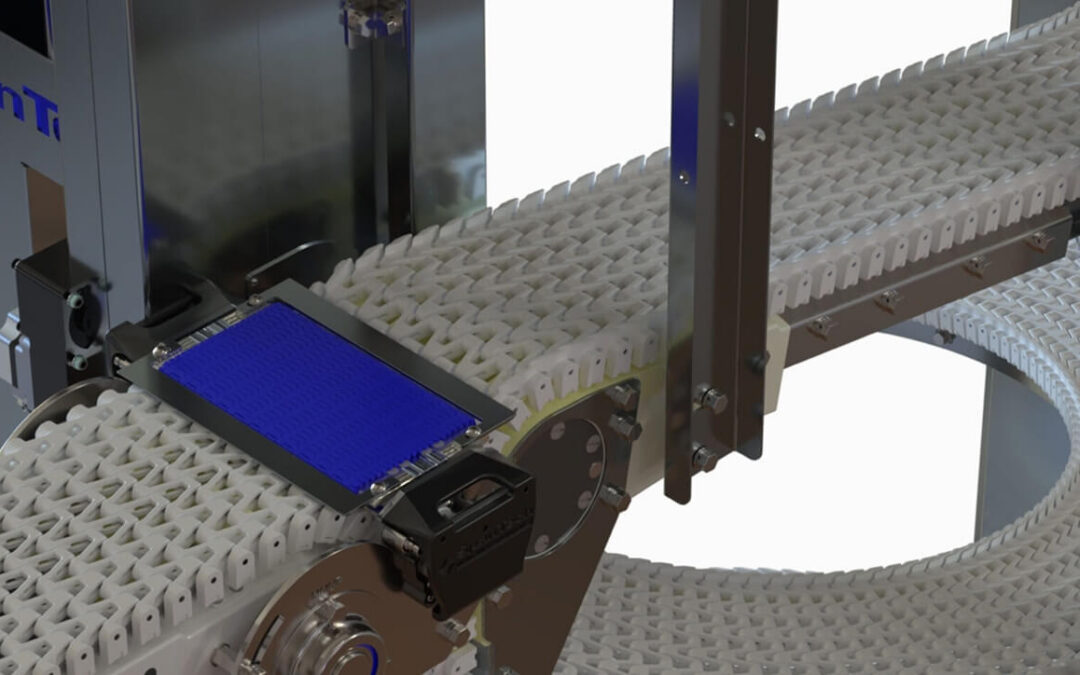
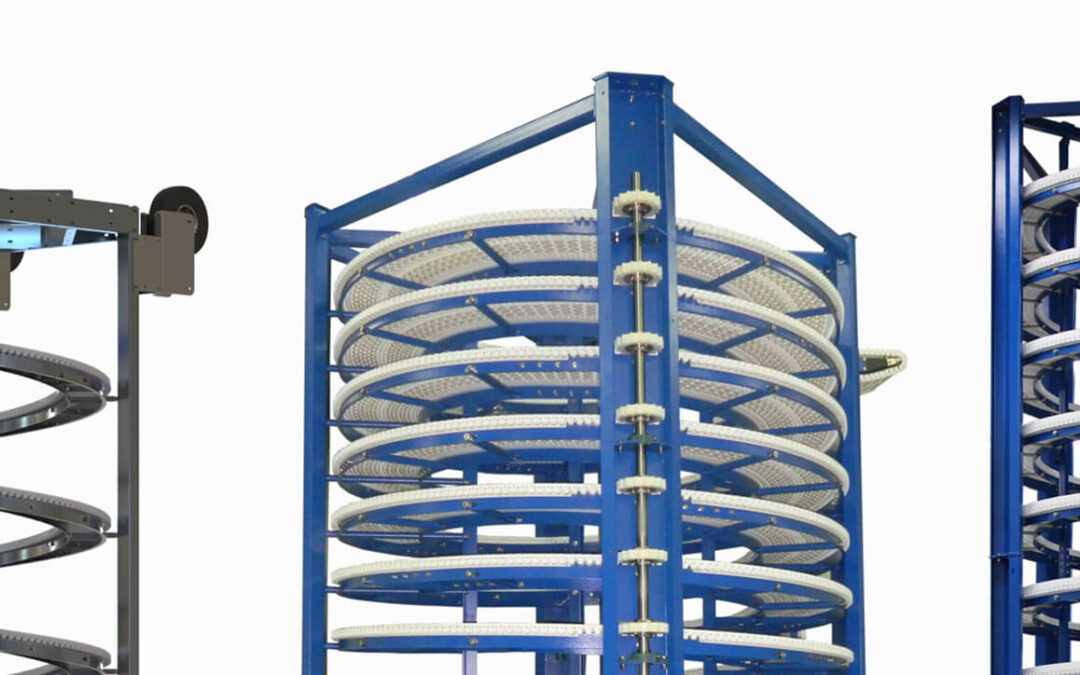
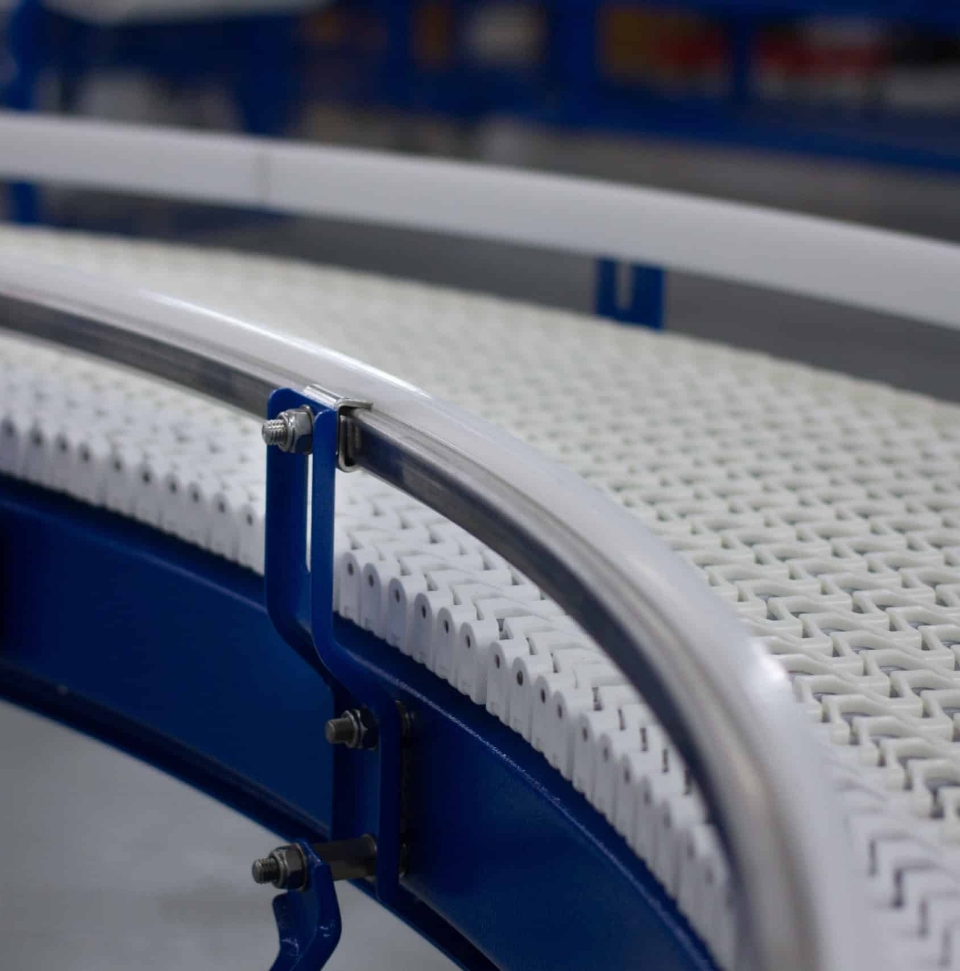
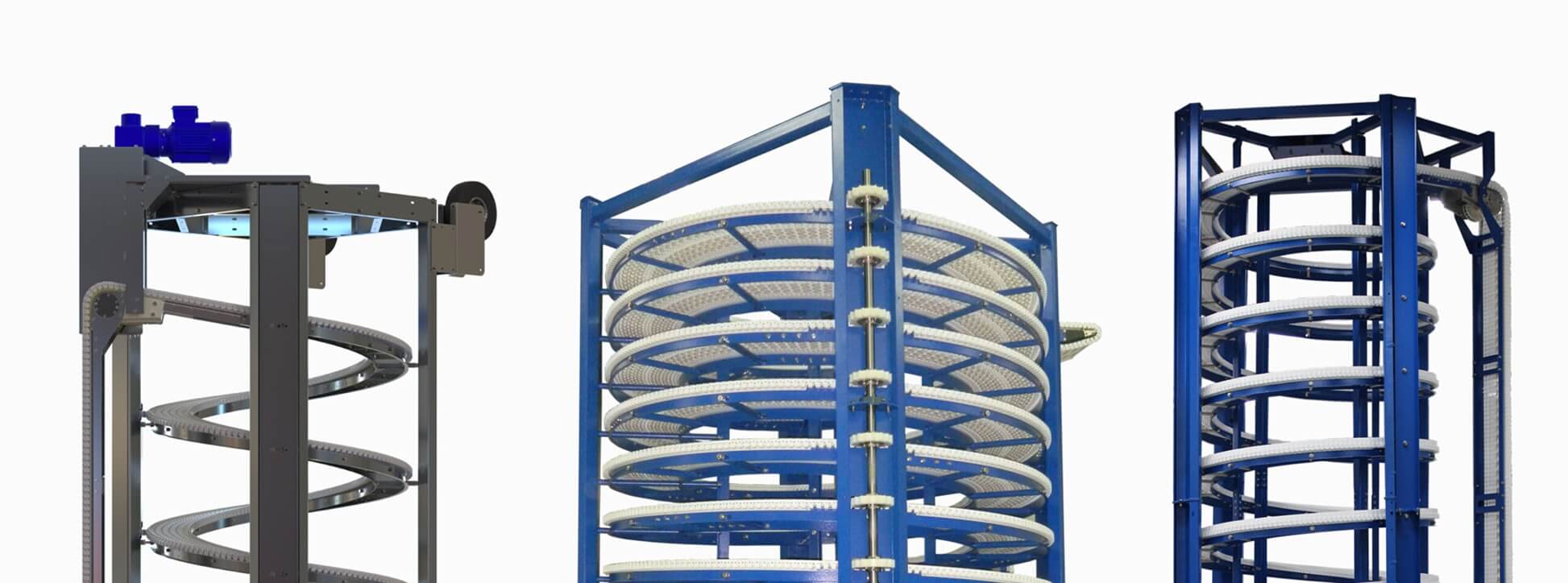
A spiral conveyor moves product vertically along a continuous helical path wrapped around a central column. Instead of climbing in a straight line, the belt winds upward or downward in a tight coil, which lets a single unit gain significant elevation inside a remarkably small footprint. Because the belt applies no back pressure to the product, even fragile or irregularly shaped items travel smoothly without damage.
Span Tech builds its spiral conveyors in two configurations. The Outrunner Spiral is the robust original, engineered for complex, high-demand applications, while the newer Spiral 2.0 offers a sleeker, more economical design for simpler jobs where heavy-duty performance is not required. A typical spiral conveyor system runs on a single drive motor and handles a high volume of product in continuous operation, which makes it a strong fit for high-throughput packaging, beverage, and distribution lines.
What Is an Incline Conveyor?
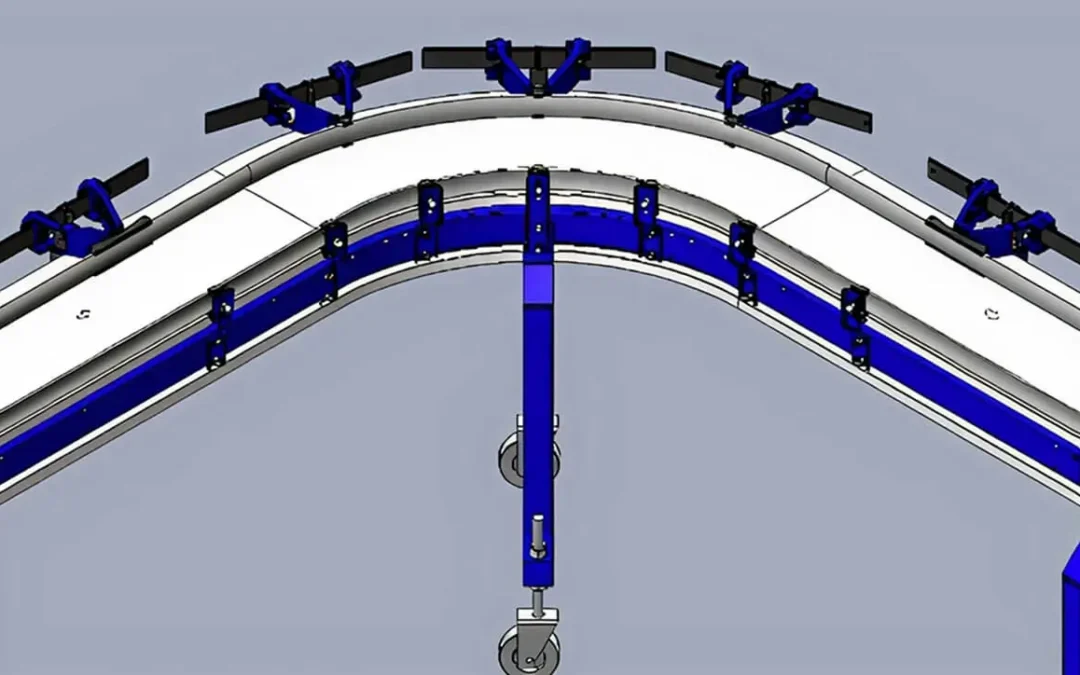
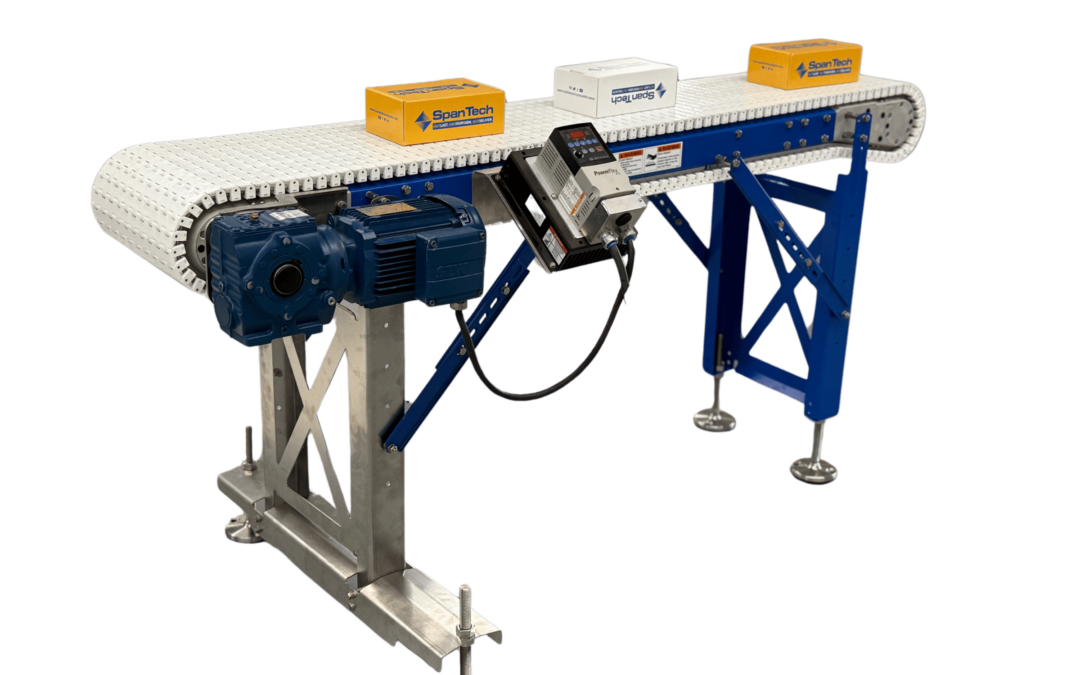
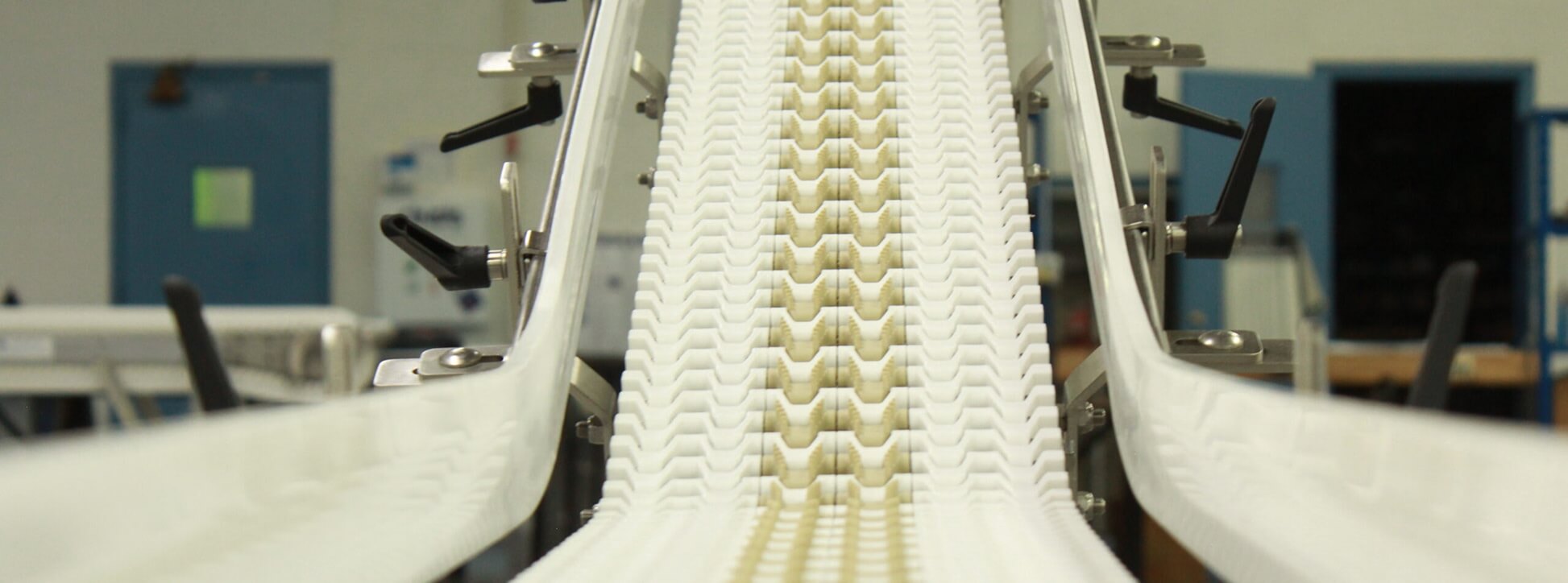
An incline conveyor carries product up or down along a straight, sloped path, often combining incline, curved, and flat sections into one continuous run. This is the more familiar configuration, and it shines when you have the floor length to accommodate a gradual slope and need to handle larger or heavier loads than a tight spiral radius allows. Span Tech incline conveyors reach speeds up to 400 ft/min and use customizable chain links matched to your specific product.
The straight-line geometry of incline conveyor systems makes them easy to visualize, easy to integrate into an existing line, and flexible across a wide range of product sizes. The tradeoff is footprint: the steeper you want the climb, the more floor length and supporting equipment you typically need.
Spiral Conveyors vs. Incline Conveyors: The Core Differences
The decision usually comes down to five factors. Weigh each one against your facility's real constraints rather than defaulting to whatever you already run.
- Floor space. This is where spiral conveyors separate themselves. A spiral uses vertical space rather than floor length to gain elevation, so it fits into a footprint a straight incline could never match. If your plant has open ceiling height but tight floor square footage, the spiral wins. If floor space is abundant, an incline is the simpler path.
- Throughput. Spiral conveyors generally deliver higher throughput. Their low-friction belt design lets them start and stop fully loaded while running at high speed, keeping product flowing without interruption. For operations where moving the maximum volume per hour is the priority, that continuous flow is a real advantage.
- Product size and weight. Incline conveyors handle larger and heavier products with ease because they are not bound by the radius of a spiral coil. Spirals have a practical between-frame width limit, so oversized cases, totes, or bulky items are usually better served by an incline.
- Energy consumption. A single elevation change on a spiral typically runs on one motor. The same change accomplished with a series of incline sections can require three or more motors, which means a spiral often consumes noticeably less energy over the life of the system.
- Budget. Incline conveyors are generally more affordable up front, which matters when the application is straightforward and floor space is not a constraint. A spiral conveyor system carries a higher initial investment but can pay it back through space savings and lower energy use in the right facility.
Which Vertical Material Handling Equipment Fits Your Application?
Use these scenarios as a starting point when evaluating vertical material handling equipment for your next build or upgrade.
Choose a spiral conveyor when floor space is tight, throughput demands are high, products are small to medium and need gentle handling, and you want to minimize motor count and energy draw. Food, beverage, pharmaceutical, and e-commerce fulfillment lines frequently land here because they combine high speed, hygiene requirements, and constrained footprints.
Choose an incline conveyor when you have ample floor length, need to move larger or heavier products, want the simplest possible integration with existing straight runs, and are working within a tighter equipment budget. Span Tech also builds helical conveyors, wedge conveyors, and topper lift conveyors for elevation-change challenges that fall outside the standard spiral-versus-incline question, so the right answer is not always one of the two obvious options.
Because every Span Tech system is custom-engineered and modular, both spiral and incline solutions can be tailored with specific belt widths, incline angles, chain types, and transfer points to fit your line. Many facilities run both, using spirals where space is at a premium and inclines where loads are heavy or runs are long.
Industries That Rely on Vertical Conveying
Both spiral and incline systems serve the same core sectors, though the best fit varies by product and layout. Food production and beverage production lines lean on spirals for gentle, hygienic, high-speed elevation of packaged goods, bottles, and cans. Pharmaceutical operations use both formats in cleanroom environments where alignment and sanitation are critical. Packaging and manufacturing facilities mix and match based on case size and available room. Whichever direction you go, pairing the conveyor with the right chain type is what makes the system perform for your specific product.
Incline & Decline Conveyors: Efficient, Reliable Elevation Solutions
Optimize product movement with Span Tech’s Incline & Decline Conveyors, designed for smooth, controlled elevation changes in high-speed production environments. Whether you need to transport products up or down in food processing, pharmaceuticals, e-commerce, or manufacturing, our incline and decline conveyors ensure safe, jam-free product handling while maximizing efficiency and floor space.
FAQs
How easy is it to retrofit a Span Tech spiral or incline conveyor into an existing production line?
Both systems are designed to integrate with equipment you already run. Span Tech engineers turnkey solutions that include infeed and discharge conveyors plus the transfer technologies needed to tie everything together, so you are not sourcing components from multiple vendors. Because the conveyors are modular and customizable, belt widths, angles, and transfer points can be matched to your existing line during the design phase. Sharing your current layout with the Span Tech team early is the fastest way to scope a clean retrofit.
What is the typical lead time for ordering and installing a Span Tech spiral or incline conveyor?
Lead time depends on the complexity of the system, the configuration you choose, and your customization requirements, so it varies from project to project. A simpler Spiral 2.0 or a straightforward incline run will generally move faster than a fully custom Outrunner Spiral with multiple transfers. The most reliable way to get an accurate timeline for your build is to contact the Span Tech team with your specifications and request a project schedule alongside your estimate.
Can Span Tech conveyors be customized for cleanroom or washdown environments?
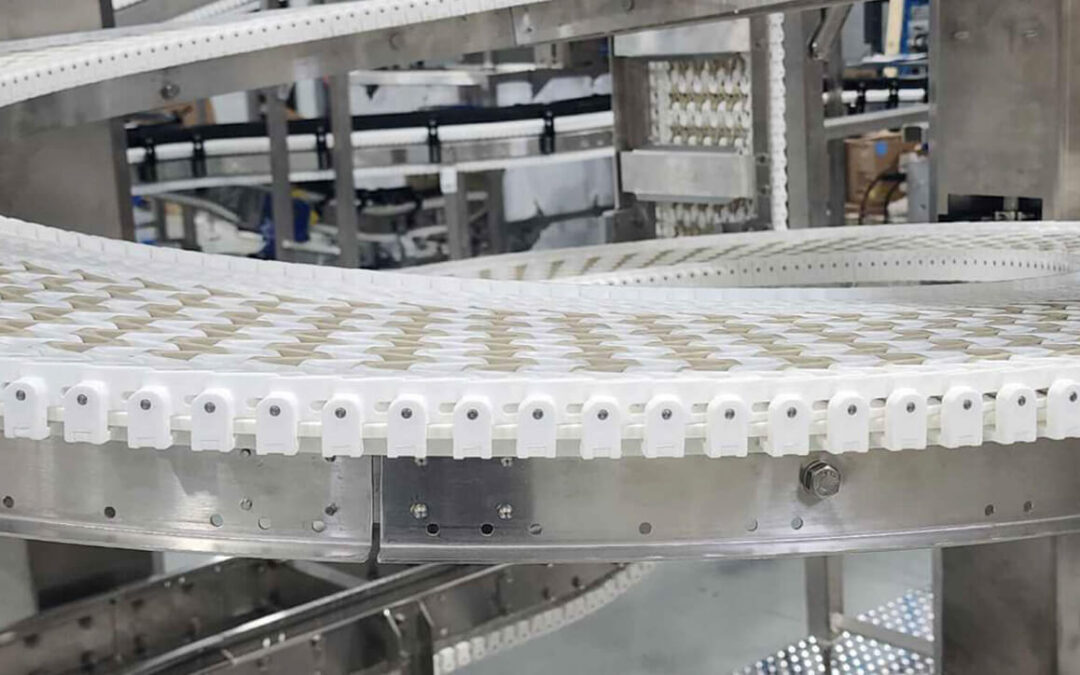
Yes. Span Tech spiral conveyors are built with stainless steel construction and modular plastic chain that is washdown capable, making them suitable for direct food contact and sanitary applications. Both spiral and incline systems can be configured for the hygiene and accessibility demands of food, beverage, and pharmaceutical production, where preventing cross-contamination is essential.
Make the Right Call for Your Facility
The choice between spiral conveyors vs incline conveyors is rarely about which technology is better in the abstract. It is about which one fits your floor plan, your products, your throughput targets, and your budget. Spirals win on space and energy efficiency for high-speed lines with smaller products. Inclines win on cost, simplicity, and heavy or oversized loads when floor length is available.
If you are weighing an upgrade or specifying equipment for a new line, the Span Tech engineering team can model both options against your actual requirements and recommend the most cost-effective path.
Request a free estimate and start the conversation with a partner that builds conveyors around your operation, not the other way around.