





Article Contents
What Is a Cooling Conveyor?
A cooling conveyor is a conveyor system engineered to reduce a food product's internal temperature to a target range before it reaches the next piece of equipment in the line. It sits between hot processing equipment (ovens, fryers, cookers, extruders) and downstream operations (packaging, freezing, slicing, coating, or metal detection) and it is designed specifically for that transition rather than simple point-to-point transport.
The distinction matters because a standard transport conveyor and a cooling conveyor are solving different problems. A transport conveyor just needs to move product from A to B. A cooling conveyor needs to do that while also managing dwell time, airflow, and often drainage, all without damaging a product that may still be soft, sticky, or fragile straight out of the oven. That combination of requirements is why cooling conveyor systems for food production are usually built around open-design belting and configurations that maximize air contact rather than solid, closed-surface belts made for simple transfer.
Getting this step right protects three things: food safety (products spend less time in the temperature danger zone), packaging integrity (sealed bags and cartons do not trap condensation or warp), and product quality (texture, snap, and structural integrity hold up through shipping).
Three Cooling Conveyor Configurations for Food Production
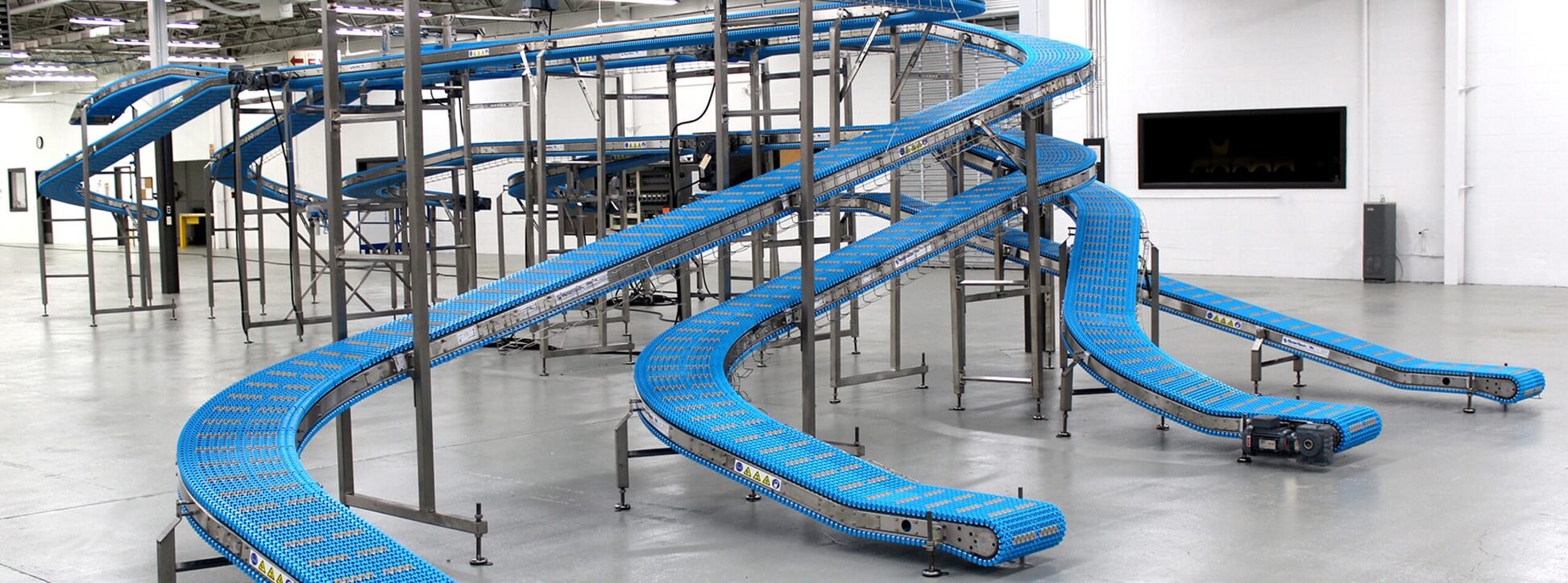
Most food cooling conveyor applications fall into one of three configurations. Which one makes sense depends almost entirely on how much dwell time the product needs and how much floor space is available to provide it.
Straight-Run Cooling Conveyors
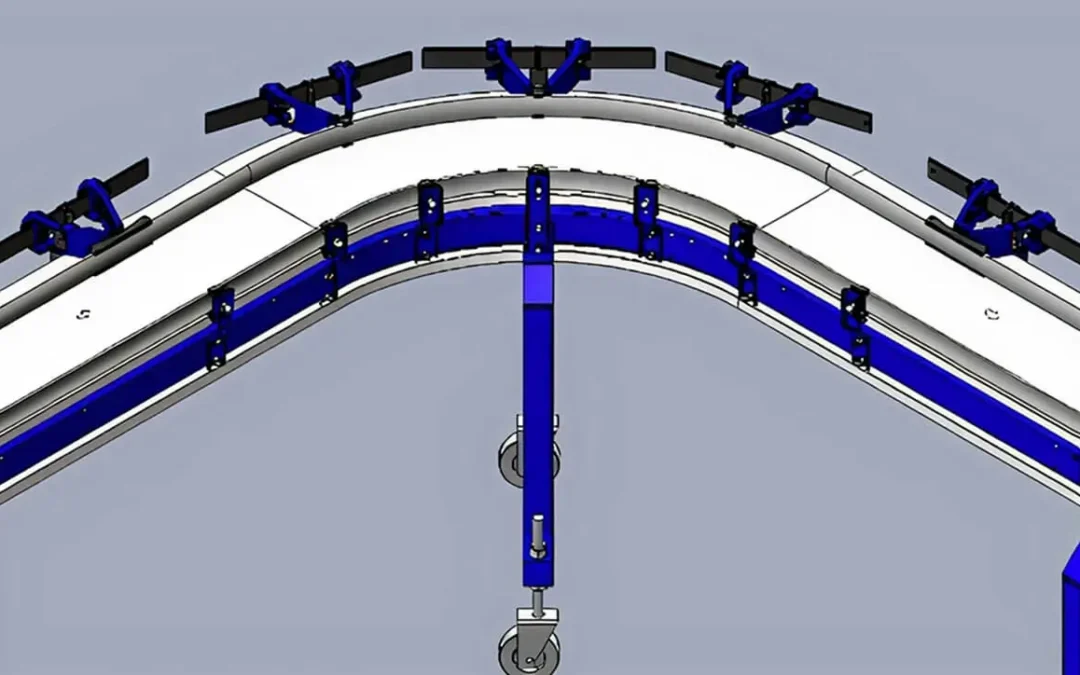
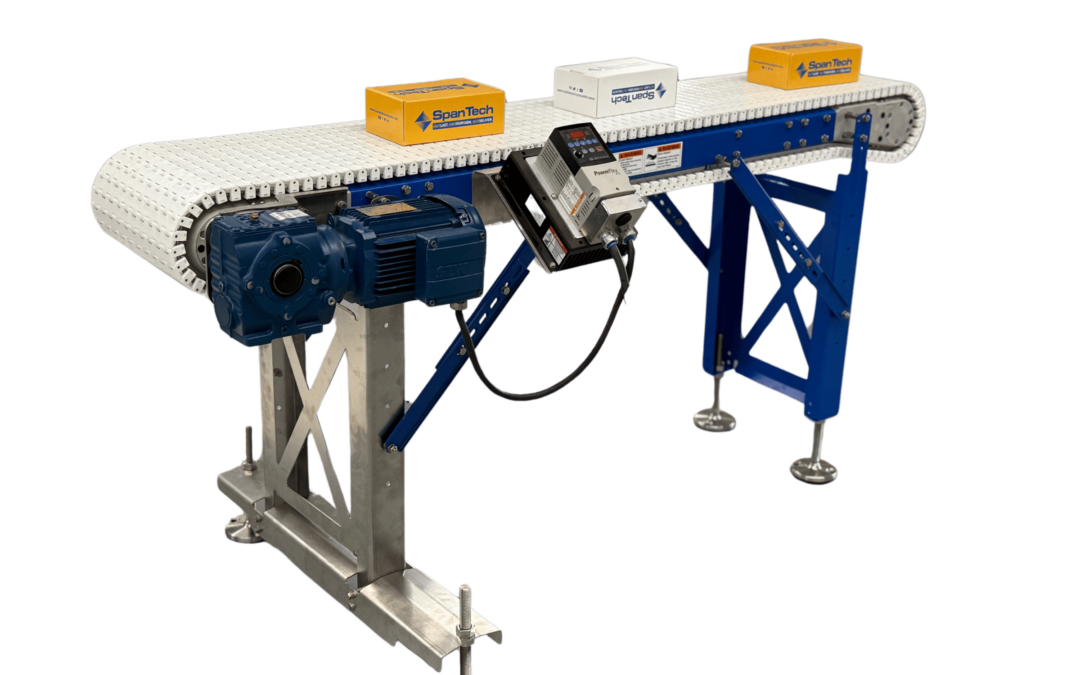
A straight-run cooling conveyor is the simplest configuration: a horizontal run of open-design belt long enough to give the product the cooling time it needs before the next station. It works well for products that only need a short cooling cycle, such as items headed for immediate packaging or a quick pass before a metal detector.
The tradeoff is floor space. Cooling time on a straight run is a direct function of belt length, so products that need several minutes of cooling can require a run that is impractical for most plant layouts. Straight-run cooling conveyors tend to work best as a short bridge conveyor rather than the primary cooling method for products with longer dwell requirements.
Spiral Cooling Conveyors
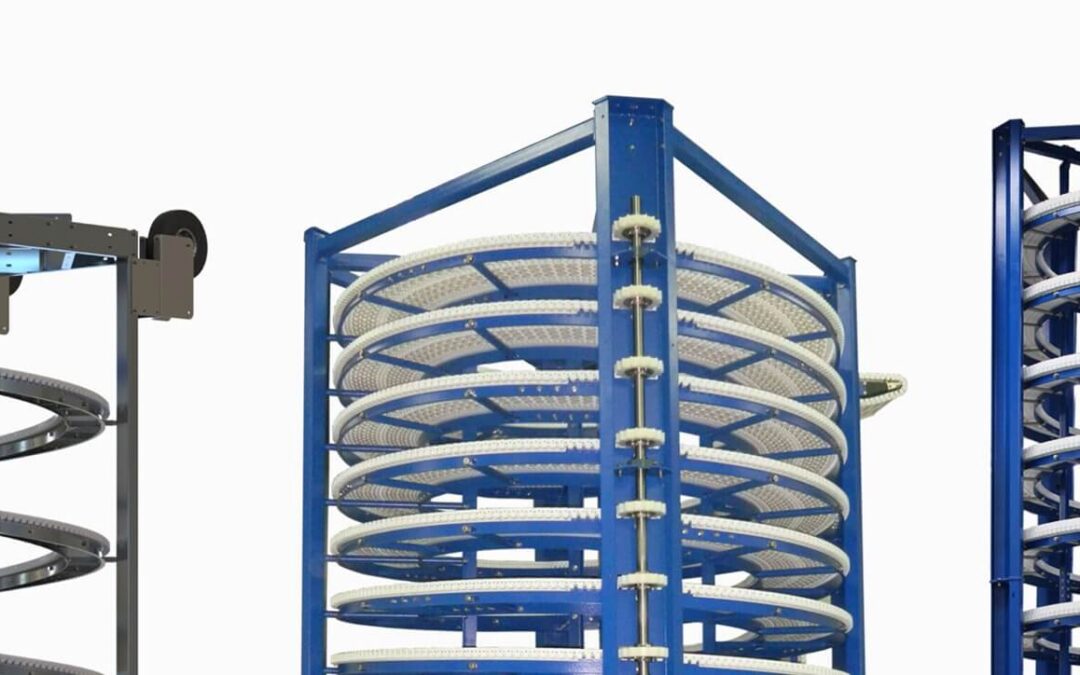
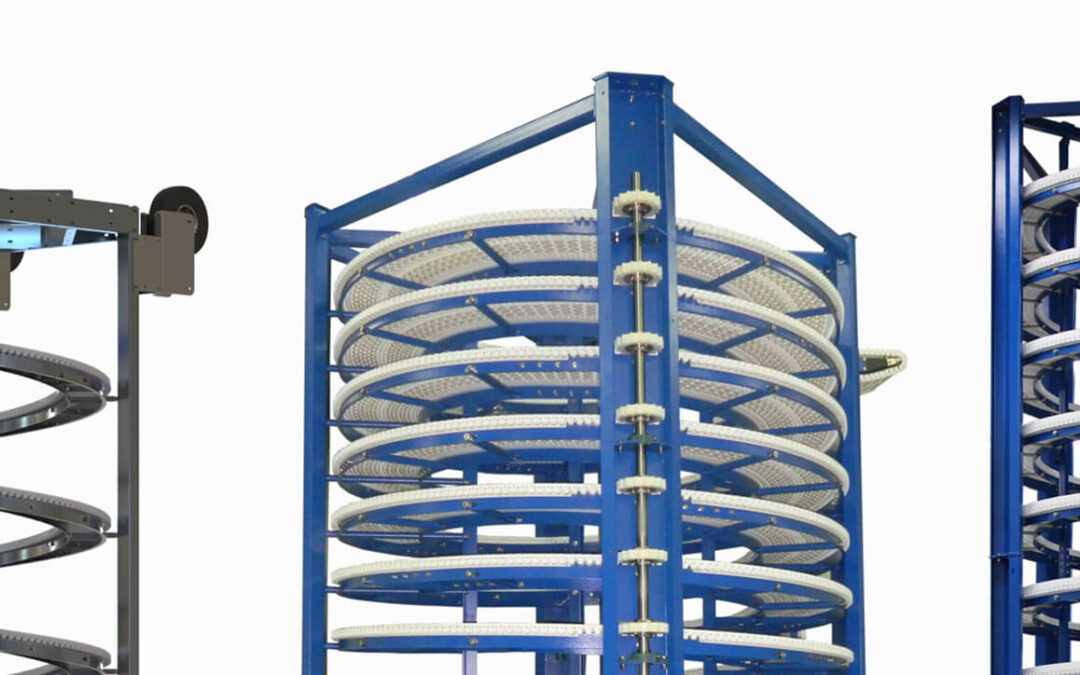
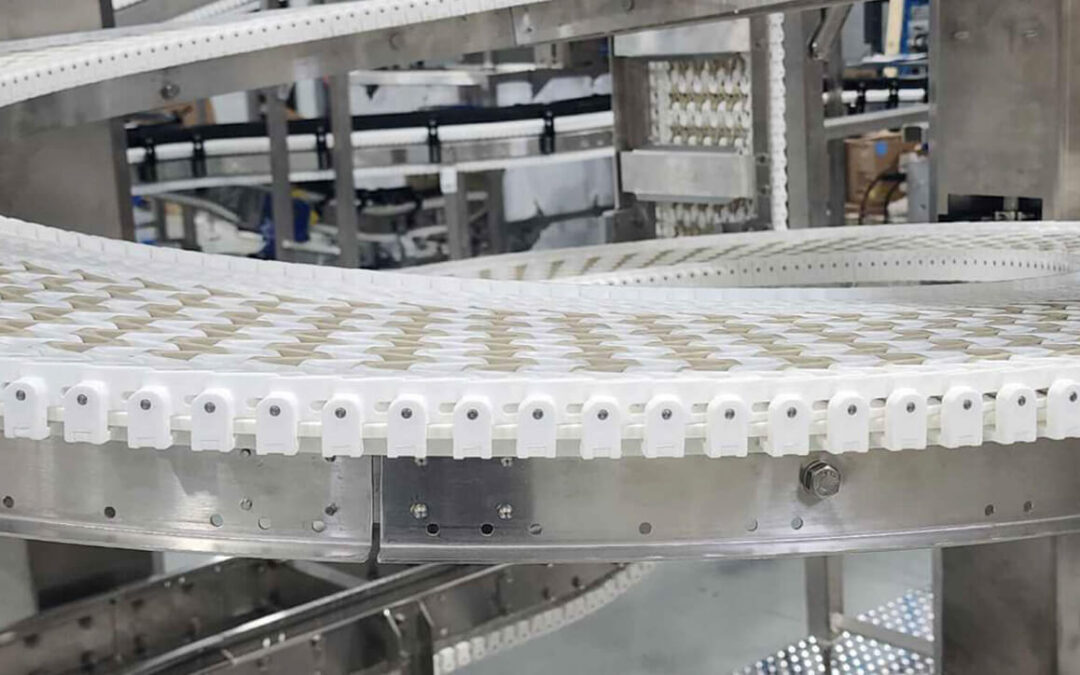
A spiral cooling conveyor solves the floor space problem by stacking the cooling run vertically. Product enters at the bottom or top and travels up or down through multiple tiers along a continuous spiral path, allowing a plant to fit several minutes of dwell time into a footprint that would otherwise require a straight-run cooling conveyor several hundred feet long.
This is the configuration most commonly specified for bakery, snack, and tortilla lines, where products need extended cooling before packaging, but plant floor space is already committed to ovens, proofers, and packaging equipment. A spiral cooling conveyor also handles delicate, high-volume products gently, as no pressure is applied to them as they move through the tiers, which matters for items like cookies, crackers, and baked snacks that can crush or deform under stress.
Cooling Tunnel Conveyors
A cooling tunnel conveyor encloses the belt inside a housing so airflow, and in some cases refrigeration, can be directed and controlled around the product rather than dissipating into the open plant environment. This gives the tightest control over cooling conditions of the three configurations, since ambient plant temperature and humidity no longer dictate how fast the product cools.
Cooling tunnel conveyors are typically specified when a product requires a controlled cooling environment, whether that means forced ambient air, chilled air, or a specific humidity level to prevent condensation or case hardening. Meat, dairy, and confectionery lines often lean toward a tunnel configuration for this reason, since product consistency depends on tighter environmental control than open-air cooling can provide.
Belt and Chain Selection: Why Open Design Matters for Cooling
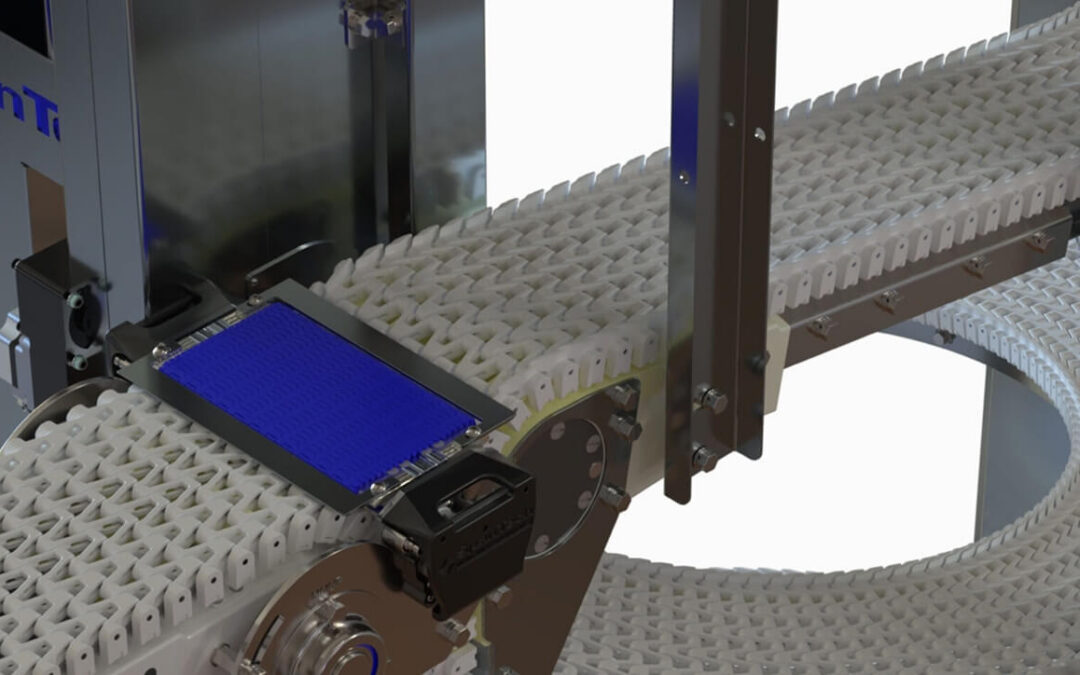
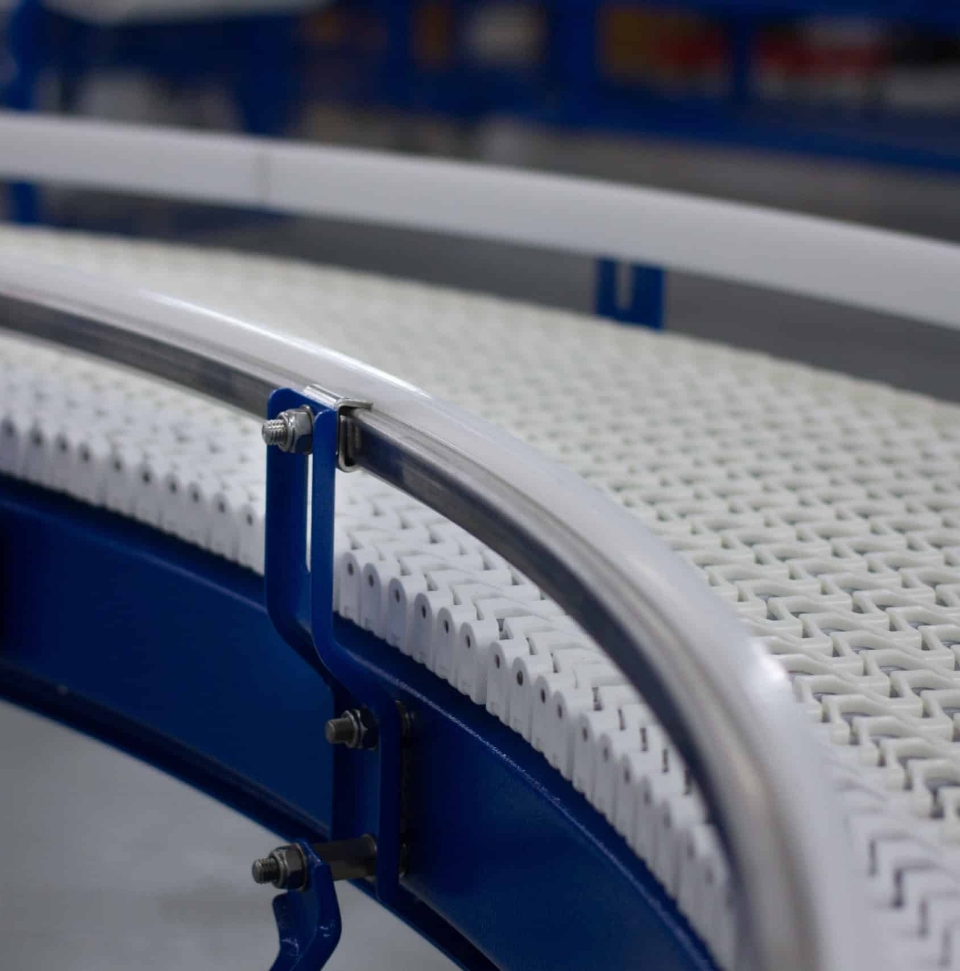
The cooling conveyor belt itself is doing as much of the work as the configuration around it. A solid-top belt cools product from the top down only, relying on ambient air moving across the surface. An open-design conveyor belt cooling system lets air move through the belt itself, not just over it, which cools product from multiple directions at once and shortens the dwell time needed to hit a target exit temperature.
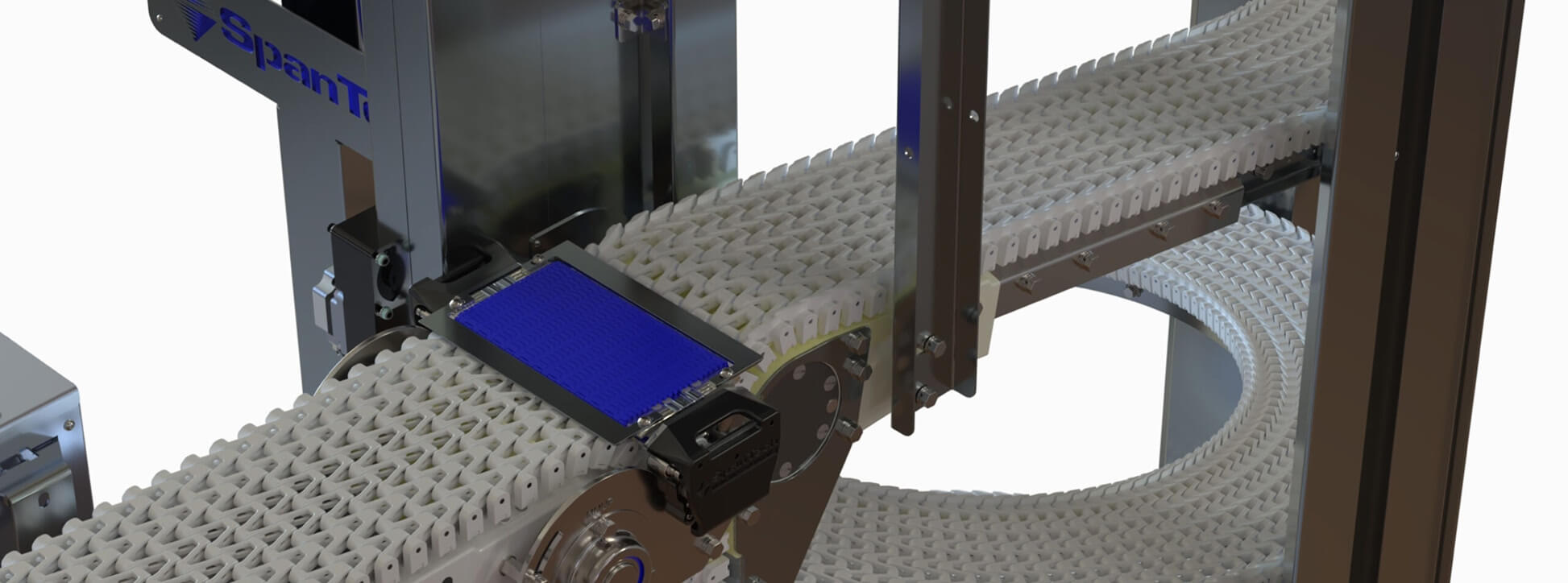
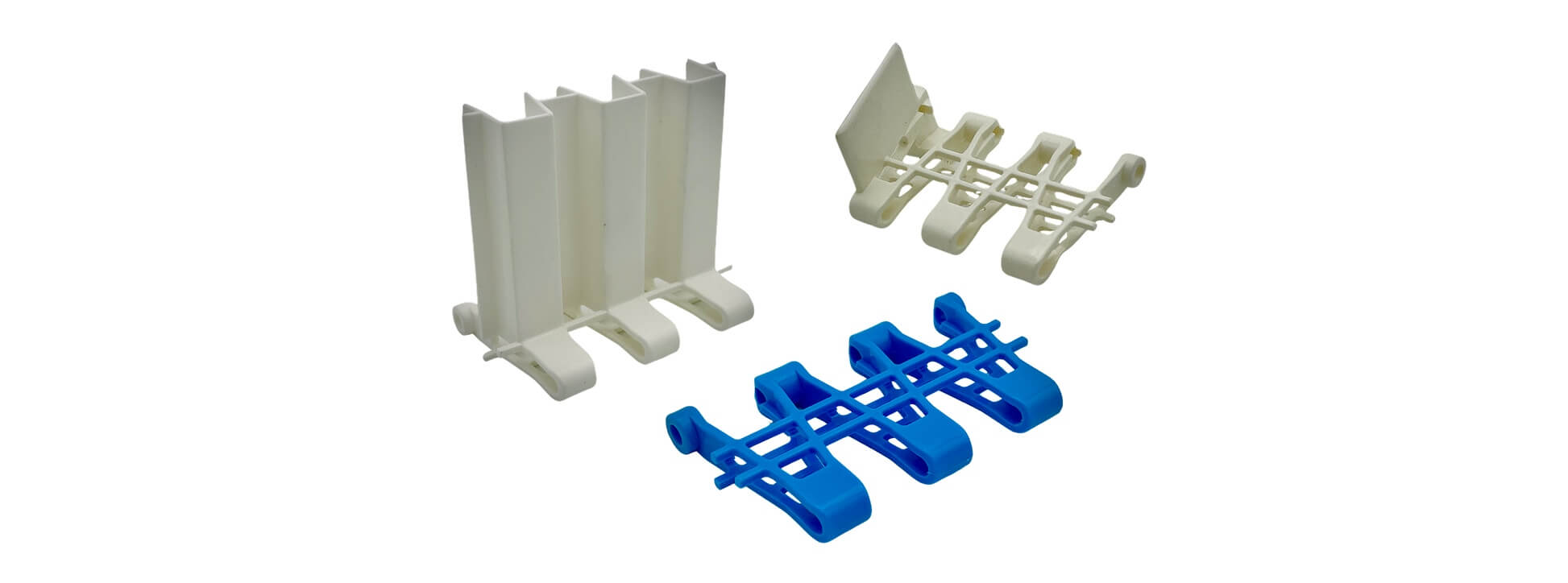
This is the specific advantage behind the Maxispan conveyor chain. Maxispan uses a 75 percent open design, meaning three-quarters of the chain surface is open space rather than solid plastic. Air passes directly through the chain and around the product resting on it, instead of only moving across the top surface, the way it would on a solid belt. That open structure is also why Maxispan sheds liquids and debris as it runs, which reduces the buildup that would otherwise slow airflow and create sanitation issues over a production shift. The same open design that makes Maxispan effective for product cooling also makes it a practical choice for running products through metal detectors, since the all-plastic construction does not interfere with detection.
Not every point in a cooling conveyor system calls for the same belt style, though. Where a product needs to drain excess liquid, oil, or moisture, or where a section calls for maximum ventilation between processing zones, a wire mesh transfer does that job well. Wire mesh is common at handoff points near fryers, ovens, or freezers, where a product is transitioning between two pieces of equipment and needs a section that will not trap liquid or restrict airflow during that short transfer.
What Determines Cooling Conveyor Dwell Time
Dwell time is the amount of time a product spends on the cooling conveyor, and it is the single most important variable in the entire design. Get it wrong and the product either reaches packaging too warm, or the line runs slower than it needs to because the product sits in the cooling zone longer than required. Four factors set that number:
- Belt speed. Slower belt speed means more time in the cooling zone for a given conveyor length. Belt speed is usually the first variable adjusted to fine-tune dwell time once a conveyor is installed, since it does not require any mechanical changes to the line.
- Ambient temperature. Plant floor temperature and humidity set the baseline for how fast heat transfers off the product on an open-air conveyor. A plant running warmer or more humid than typical will need either a longer cooling run or a controlled environment like a cooling tunnel conveyor to hit the same exit temperature.
- Product mass and density. A thick-cut protein or dense baked good holds heat longer than a thin cracker or chip, even at the same starting temperature, because there is more mass for the heat to move through before it reaches the surface.
- Target exit temperature. The temperature a product needs to reach before the next step varies by application. A product headed straight to ambient packaging needs a different exit temperature than one headed into a blast freezer, and that target drives how much dwell time the design needs to provide.
These four variables are calculated together during the design phase, which is why cooling conveyor systems are rarely a stock, one-size-fits-all purchase. A conveyor sized correctly for one product's mass and exit temperature requirement will not necessarily work for a different SKU running through the same line.
Sanitation Requirements for Food Cooling Conveyors
A food cooling conveyor sits in one of the more exposed positions on the line. Product is uncovered, often still releasing moisture or oil, and moving through open air for an extended period, which makes sanitation design as important as thermal performance.
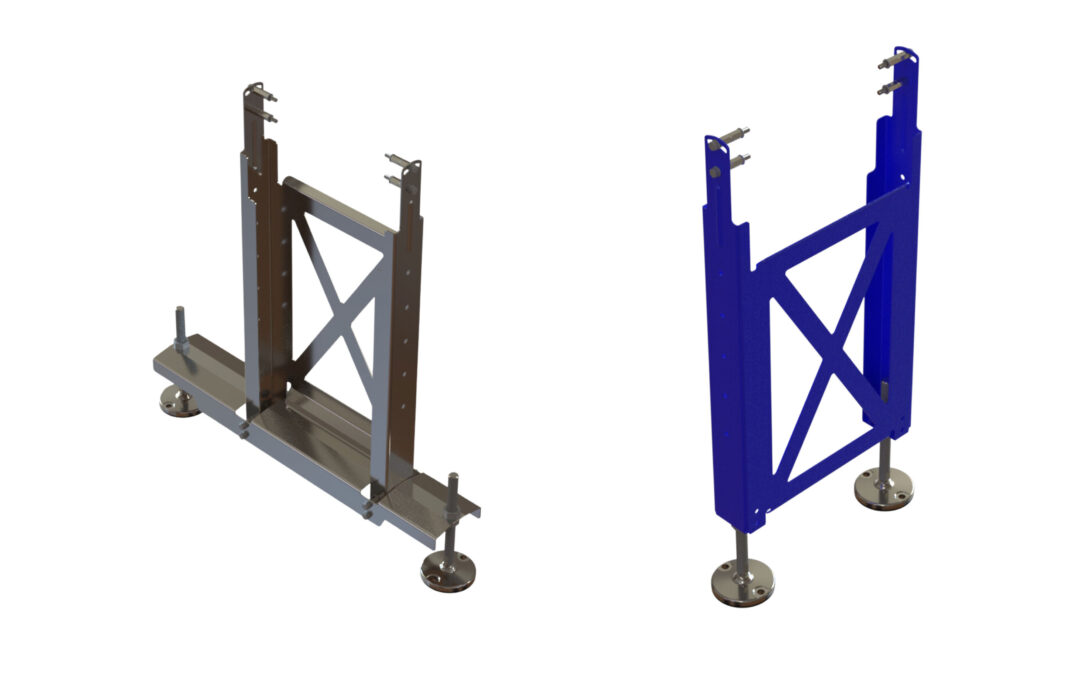
Open-design chains like Maxispan already reduce the buildup problem by letting debris and liquid fall through rather than collect on the belt surface. That reduces bacterial growth risk and cuts down on the cleaning time needed between runs. Beyond the chain itself, most food-grade cooling conveyors are built with stainless steel frames, washdown-capable components, and clean out holes positioned along the frame sections so crumbs, spills, and product fragments can be cleared without disassembling the conveyor. Modular chain designs that allow individual sections to be opened for service add another layer of accessibility for daily and deep-cleaning schedules.
None of this is optional in a facility that must meet FDA or USDA sanitation standards. A cooling conveyor that traps moisture or debris in hard-to-reach areas becomes a contamination risk precisely because it operates at the temperature range and moisture level where bacteria grow fastest, which is exactly why sanitation-focused design details carry as much weight as belt speed and configuration when specifying this equipment.
Integration: What Cooling Conveyors Connect To
A cooling conveyor almost never operates on its own. It is one link in a chain of equipment, and what sits on either side of it changes based on the sub-industry.
In baking and snack production, a cooling conveyor typically follows an oven or fryer and precedes packaging, inspection, or an accumulation zone that buffers product before it reaches the packaging line. Spiral cooling conveyors are especially common here because baking and snack lines need extended dwell time in a footprint already crowded with ovens, proofers, and packaging equipment.
In frozen food production, the cooling conveyor is the bridge between initial processing and a blast freezer or spiral freezer. Getting product to the right pre-freeze temperature matters here more than almost anywhere else in food production, since product that enters a freezer too warm forms larger ice crystals that degrade texture once thawed. Frozen food lines also demand equipment that can transition between a warmer cooling zone and a sub-zero freezing environment without corrosion or component failure.
In meat and poultry processing, cooling conveyors typically sit between a cook step (smoking, roasting, or frying) and a chiller, slicer, or packaging line, with tighter exit-temperature tolerances due to food safety regulations for cooked protein.
In dairy production, cooling conveyors often follow a heat-treatment or molding step, ahead of packaging or further processing, where consistent surface temperature affects how well the product holds its shape and seals correctly in film or cartons.
Across all four sub-industries, the underlying integration challenge is the same: the cooling conveyor must match the throughput of the equipment feeding it and the equipment receiving product from it, or it becomes the constraint limiting how fast the entire line can run.
Frequently Asked Questions About Cooling Conveyors
Can a cooling conveyor be retrofitted into an existing line?
In most cases, yes. Cooling conveyors are frequently added to lines that were originally designed without a dedicated cooling step, or upgraded when a new product line requires more dwell time than the existing equipment provides. Because configurations like spiral cooling conveyors are built around a compact footprint, they can often be worked into the gap between existing ovens or fryers and packaging equipment without a full line rebuild. The main constraints are available floor space, ceiling height for a spiral configuration, and matching the conveyor's throughput to the equipment already running on either side of it.
Why do bakeries and tortilla lines often use spiral cooling instead of straight cooling?
Bakery and tortilla products typically need several minutes of cooling time before they can be stacked, bagged, or boxed without sticking, warping, or trapping condensation. Providing that much dwell time on a straight-run cooling conveyor would require an impractically long conveyor. A spiral cooling conveyor delivers the same dwell time by stacking the cooling path vertically, fitting minutes of cooling into a footprint that a straight conveyor could not match on the same plant floor.
Does product cooling on a conveyor affect FDA or sanitation compliance?
Yes, indirectly but significantly. Cooling conveyors operate in a temperature and moisture range where bacterial growth risk is elevated, so the equipment has to be built to prevent buildup and support fast, thorough cleaning. Open-design chain, washdown-capable frames, stainless steel construction, and clean out holes all support compliance with FDA and USDA sanitation expectations, and choosing a cooling conveyor without these features can create a compliance gap even if the cooling performance itself is adequate.
Get a Cooling Conveyor Built for Your Line
Every food production line reaches a point where the product has to cool before it can move on, and stock equipment rarely fits the exact dwell time, footprint, or sanitation standard a plant needs. Span Tech designs cooling conveyor systems around the product, not the other way around, whether that means a spiral cooling conveyor for a tight bakery footprint, a cooling tunnel conveyor for tighter environmental control, or a straight-run section built to bridge two existing machines.
Talk to a Span Tech engineer about your product, your target exit temperature, and your floor space, and get a cooling conveyor design built to keep your line running at full speed.